Language country Switzerland

As someone who grew up bilingual, I was excited to see "Sprachenland Schweiz" at the National Museum. My mixed conclusion.

The "Sprachenland Schweiz" exhibition takes visitors on a train journey through Switzerland's linguistic landscape. That's why the entrance is reminiscent of a railway station concourse. If you miss the old railway station display board, it currently welcomes you to this very exhibition. Equipped with headphones, the journey begins. And here are my pro arguments:

Pro:

_ Technically, the exhibition is superbly realised. Visitors move freely around the space and the acoustic information changes accordingly depending on which "audio island" they are on.

_ It becomes clear that Switzerland is a country of languages and Swiss culture is diverse. This is illustrated by the babble of languages that can be heard between the individual stations. We Swiss are used to hearing other languages, learning them or at least engaging with them. We don't travel to Mallorca and expect everyone to speak German.

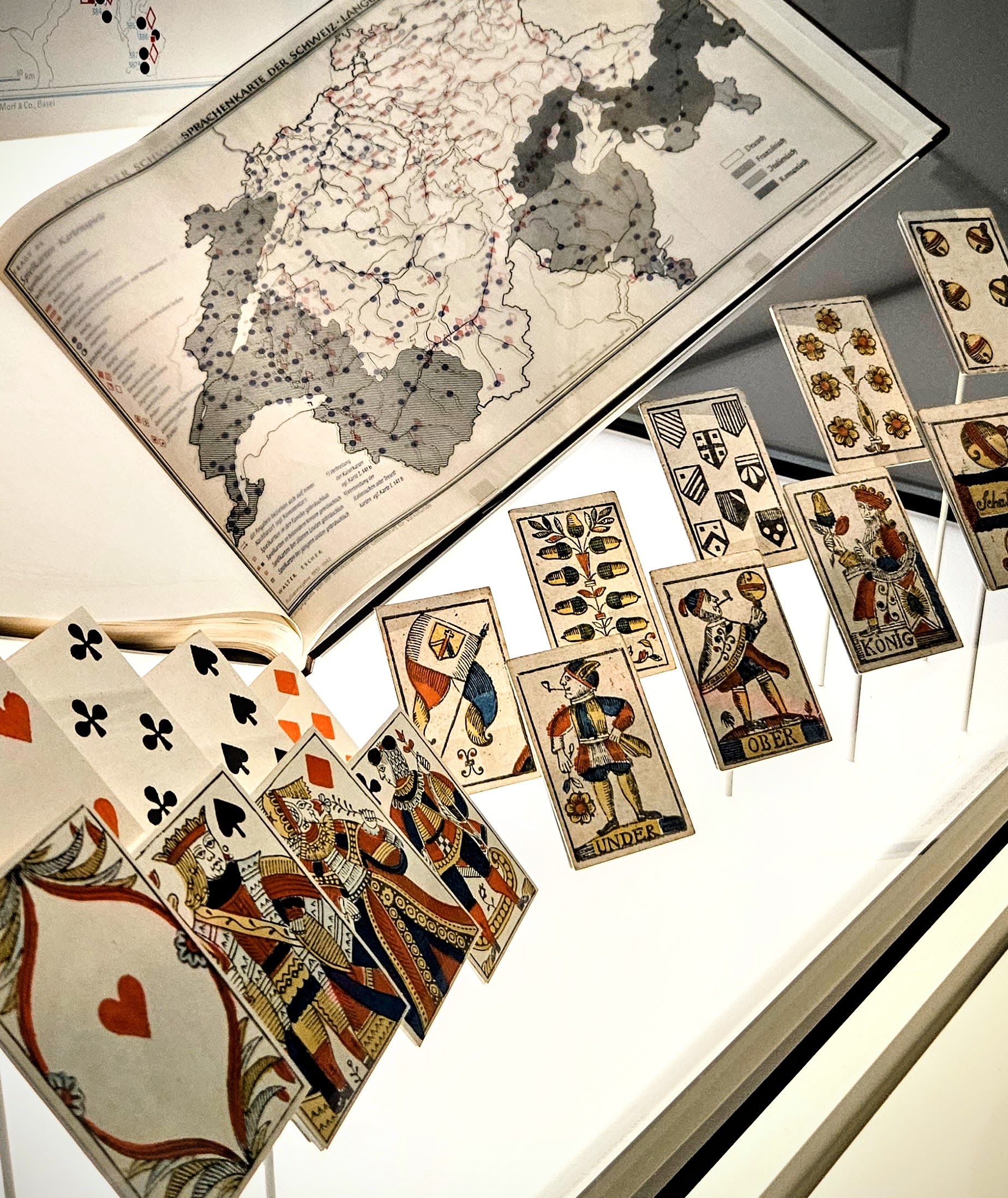
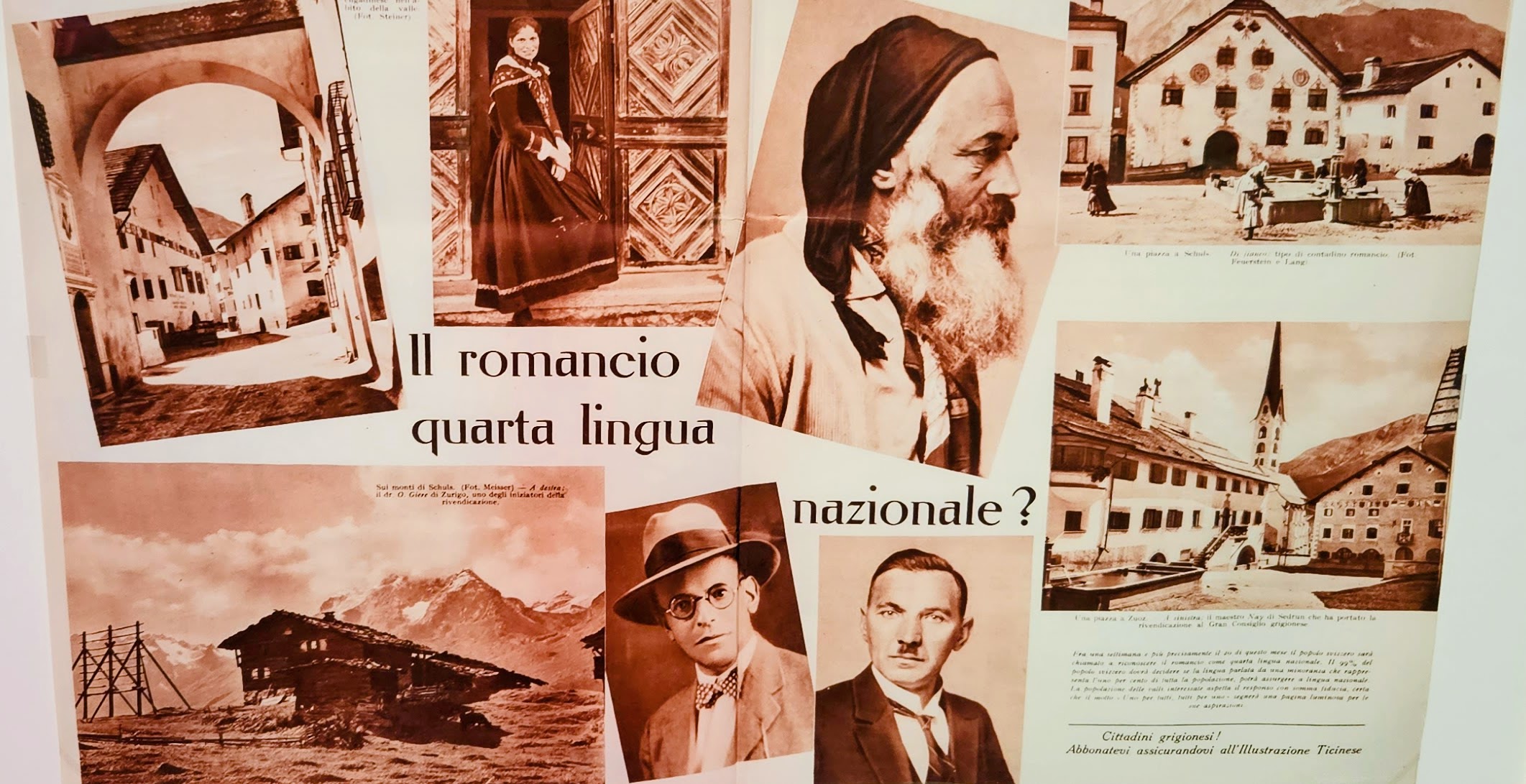
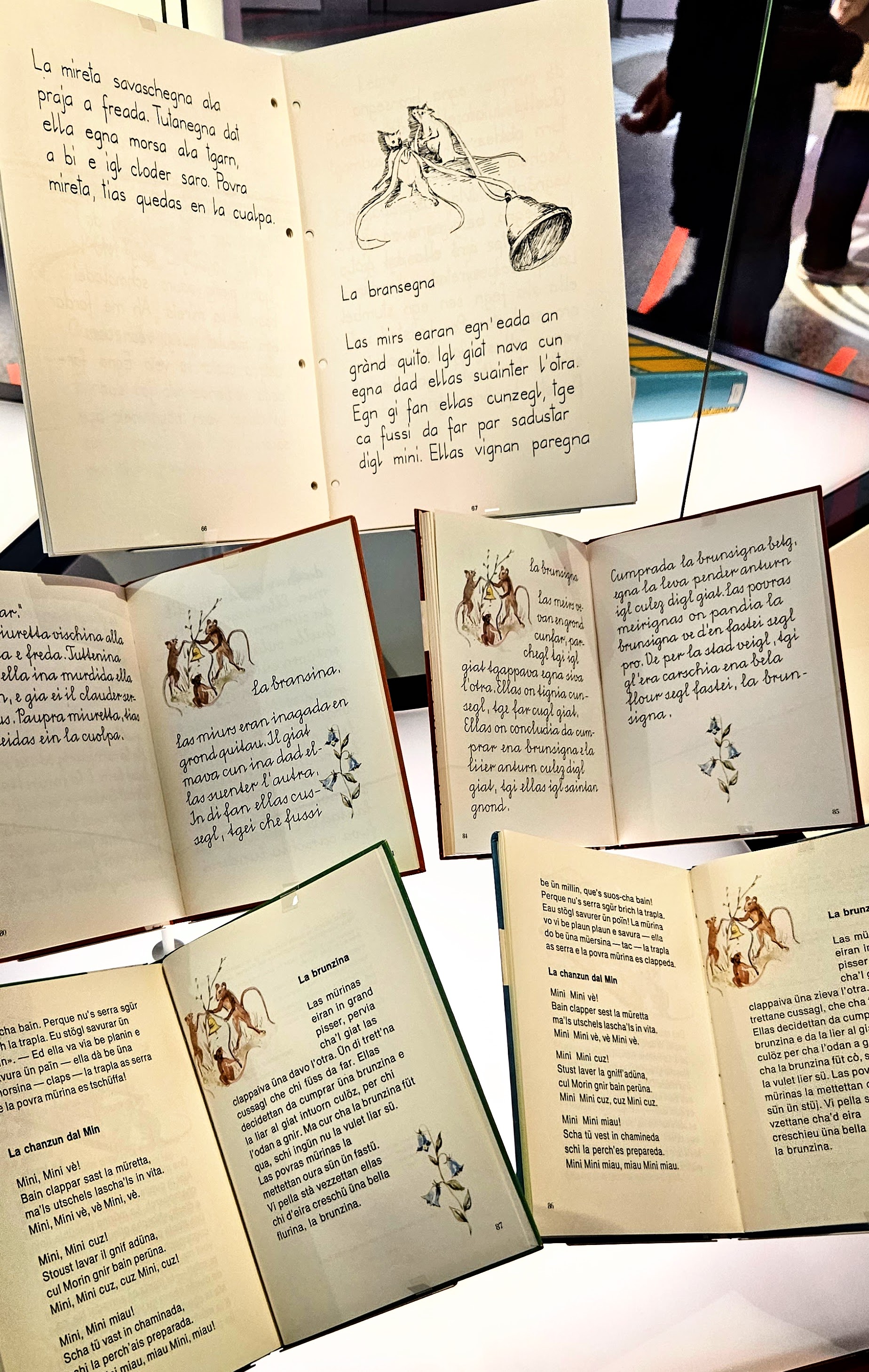
_ Although the exhibition is designed to be quite sober, it also harbours many emotional moments. When I hear "Chara lingua da la mamma" in the Rhaeto-Romanic section, I automatically get goosebumps. Many audio examples, old exercise books, playing cards etc. illustrate Switzerland's living multilingualism.

_ The short films at the end of the exhibition: here, for example, writer Usama Al Shahmani explains when he uses his mother tongue and language of his heart, Arabic, for poetry and when German is the right language for him.

_ The short films also focus on deaf people and sign language: Pirmin is a visual designer at the Swiss Federation of the Deaf (SGB-FSS) and is deaf himself. He explains that three sign languages are used in Switzerland and how visual and mimic they are. I wonder how the exhibition might work for deaf people. The exhibition description states that support is available, but I would like to know what this means in concrete terms, just out of curiosity.

Contra:

_ Never again on a Sunday! Far too many people get far too close. In order to hear the audio descriptions, visitors have to get a certain distance from an exhibit. So if you don't like being close to strangers, visit the exhibition on weekdays.

_ Due to the audio-only tour and too many people, I skipped a few stations and now I don't know if I missed anything? I would find additional explanations, such as a handout to take away, very helpful. I would have liked to read up on the history of the individual languages at home.

Conclusion:

The exhibition is technically well done and I think it's suitable for anyone who didn't grow up multilingual, who doesn't yet know Switzerland well and for school classes. Personally, however, it lacks a bit of depth and discussion: the fact that all Swiss people are used to being multilingual does not automatically mean, for example, that they are more open to other languages and therefore cultures than other countries. As a Romansh speaker in Zurich, I often hear how beautiful my mother tongue sounds. But some people don't understand or support the fact that the language is subsidised. That would be worth discussing. Or how the Ticino and Romansh speakers are perceived in German-speaking Switzerland and vice versa could also be discussed in a plenary session. However, the audio-only tour means that visitors walk through the exhibition in silence and actually speechless, which I think is a shame.

Published from Gretta Bott on November 16, 2023.

More from our scouts

Where’s the performance?
24.09.2026

Where’s the performance?

Gustavo, who will soon be 8, is taking part in a family tour of the Zurich Opera House. And he is following in the footsteps of a great footballer.

Adrian Schräder
Adrian Schräder
The mega fearsome Mrs Rottenmeier
26.02.2025

The mega fearsome Mrs Rottenmeier

Young critic Gustavo can’t bear to watch any more: is the new production of *Heidi* for children really that bad?

Adrian Schräder
Adrian Schräder
Literary highlights in January
08.01.2026

Literary highlights in January

As the new year dawns, ideas and speeches begin to take shape; we learn amazing things about animals, the women in the spotlight, and nostalgia.

Seraina Kobler
Seraina Kobler

More from your scouts

Gretta Bott
Gretta Bott
Claudia Peter
Claudia Peter
Andrea Keller
Andrea Keller
Sandra Smolcic
Sandra Smolcic
Coucou Kulturmagazin
Rebekka Bräm
Rebekka Bräm
All scouts